
The short answer: braces and clear aligners are designed to move teeth gradually into a planned position. The main options are traditional metal braces, ceramic (clear) braces and clear aligners such as Invisalign®. If you are looking into braces in Hoppers Crossing, the right choice depends on your teeth, your bite, your age and your lifestyle, and it is confirmed after an examination at your first visit.
- The options: metal braces, ceramic braces and removable clear aligners.
- Who may benefit: children, teenagers and adults with crowded or spaced teeth, or a bite that does not fit together well.
- How long it takes: commonly one to three years in total, though it varies from person to person.
- After treatment: retainers are usually recommended, because teeth can drift back towards their old positions.
- The first step: an examination, a chat about your goals and a written estimate, with no need to decide on the day.
What are braces and clear aligners?
Orthodontic treatment applies gentle, steady pressure to teeth so that they move into a planned position over time. Fixed braces do this with small brackets bonded to the teeth and a wire that is adjusted at regular visits. Clear aligners do it with a series of custom-made, removable plastic trays, and you move on to a new set every few weeks.
Teeth that are well aligned may be easier to brush and floss, so people consider treatment for oral health as well as for how their smile looks.
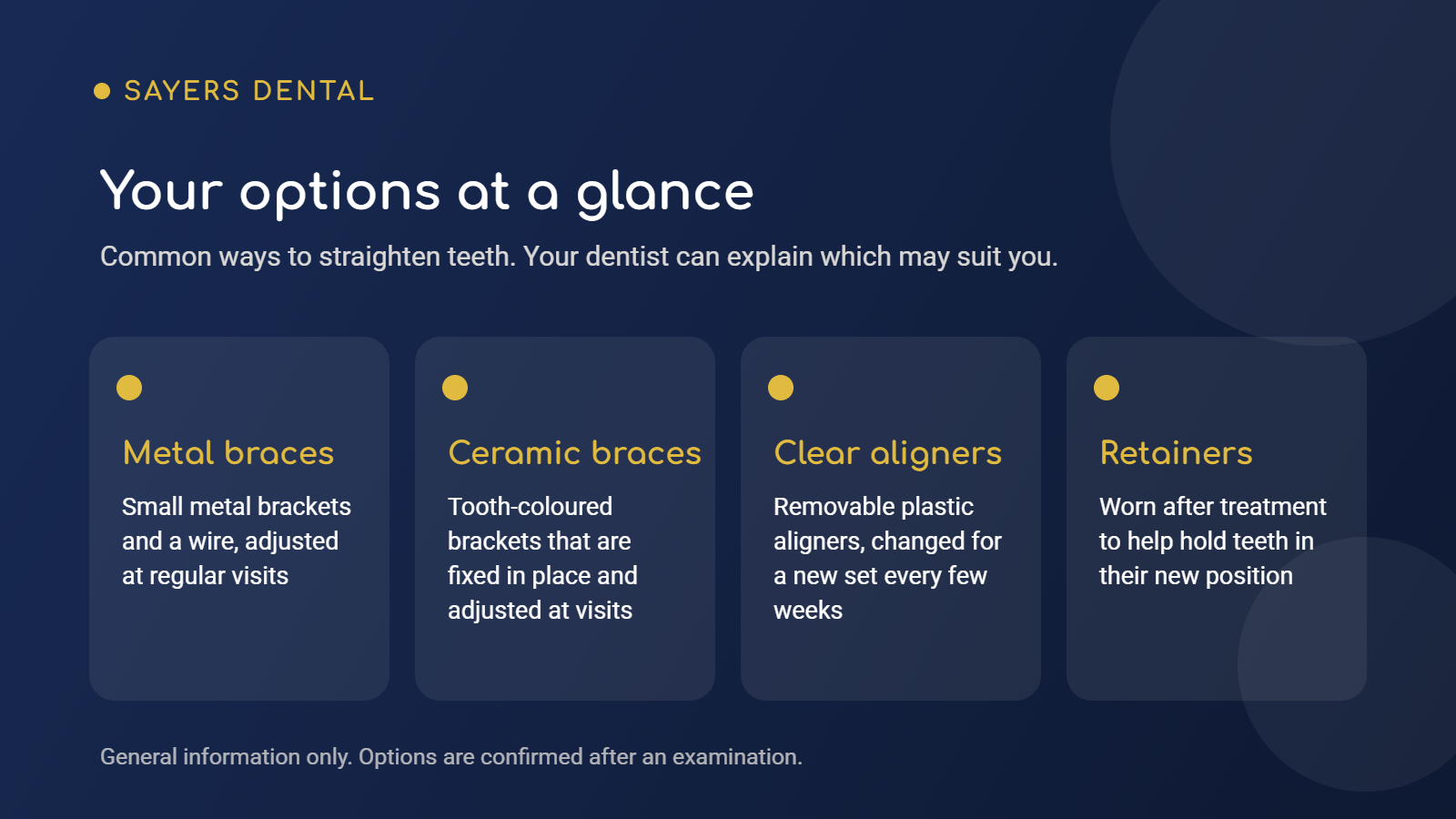
Braces and aligner options at a glance
Traditional metal braces
Metal brackets are bonded to the teeth and joined by a wire. They are fixed in place for the length of treatment and are used for a wide range of alignment and bite concerns.
Ceramic (clear) braces
These work in the same way as metal braces but use tooth-coloured or clear brackets, which are less noticeable. They are also fixed in place, and careful cleaning is important throughout.
Clear aligners (Invisalign®)
Clear aligners are made from transparent plastic and fit closely over the teeth. They are removable, so you take them out to eat and drink and to clean your teeth, and you wear them for most of the day. They rely on you wearing them as directed.
Not every option suits every bite, and your dentist will explain which may be appropriate. Our pages on braces and Invisalign have more detail.
Who may benefit from orthodontic treatment?
People of many ages consider orthodontic treatment. Common reasons include:
- Crowded or overlapping teeth.
- Gaps or spaces between teeth.
- An overbite, underbite, crossbite or open bite.
- A bite that makes chewing or cleaning teeth harder.
- A wish to change how the teeth look when you smile.
Children: we suggest a first check around age seven, when a mix of baby and adult teeth makes it easier to see how the jaws and teeth are developing. That does not mean treatment starts then. Often it means monitoring. You can read more on our children’s dentistry page.
Teenagers and adults: many teenagers and adults have orthodontic treatment. Healthy teeth and gums matter at any age, so decay or gum disease needs to be treated before braces or aligners begin.
What happens at your first visit?
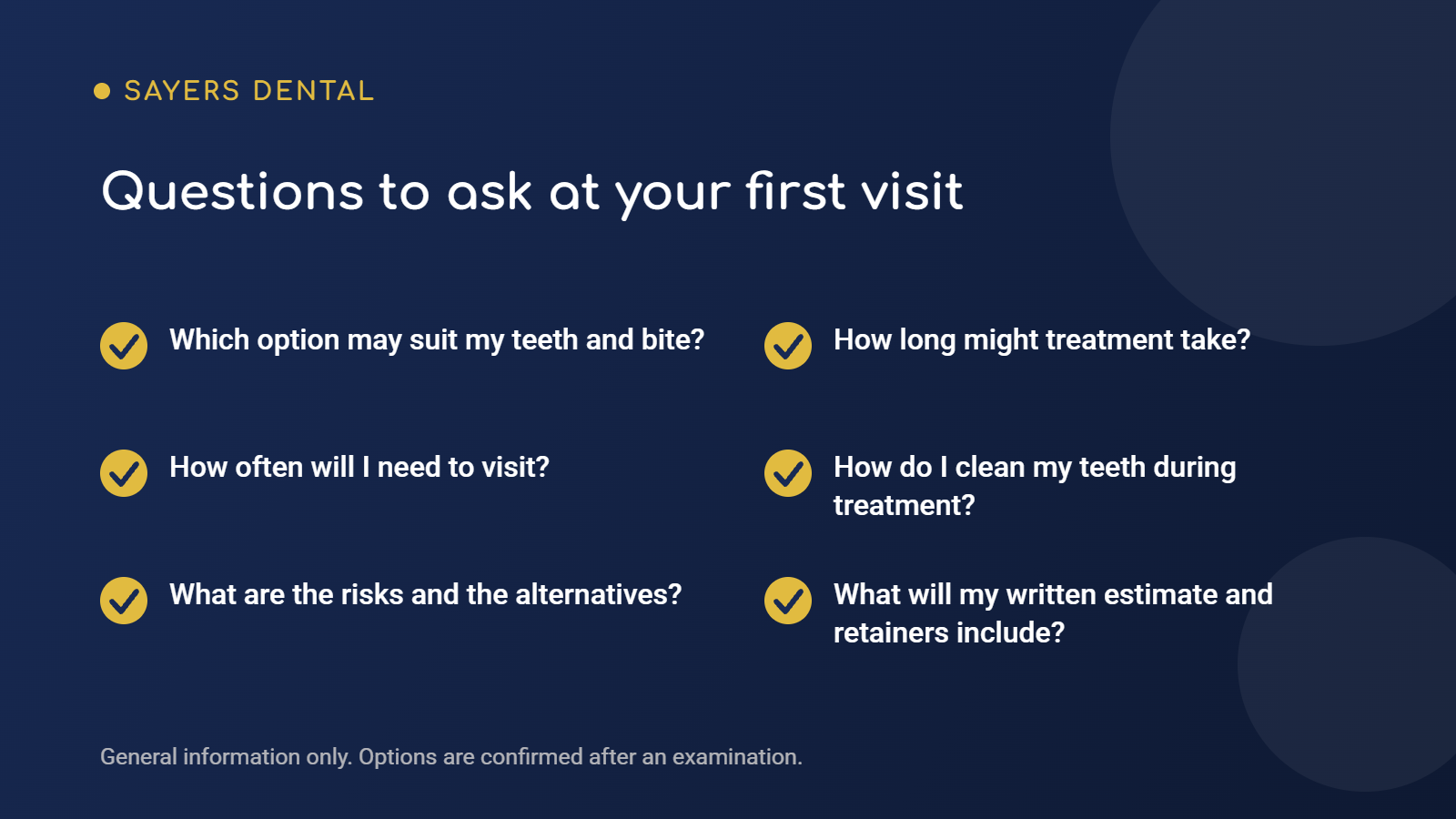
The first visit is about understanding your concerns and explaining your options. It usually includes:
- A conversation about your goals, concerns and your medical and dental history.
- An examination of your teeth, gums and bite.
- X-rays or photographs where needed, such as a digital OPG or other digital x-rays, to see the position of the teeth and jaws.
- An explanation of the options that may suit you, including the alternatives and a likely timeframe.
- A written treatment plan and estimate, so that you can take time to consider it.
If you or your child feels nervous about dental visits, let us know. Our dental fear page explains how we can help.
The stages of treatment
Every plan is individual, but treatment commonly follows these stages. Timeframes vary.
- Examination and planning: records such as x-rays and photographs, then a written plan.
- Preparing your mouth: any decay or gum concerns are managed first, and sometimes a tooth needs attention before treatment starts.
- Getting started: braces are fitted, or your first aligners are supplied, with clear instructions on wearing and cleaning them.
- Regular visits: braces are adjusted every several weeks, and aligner wearers move through their sets and attend review visits.
- Finishing: when the teeth reach the planned position, braces are removed or the final aligners are completed.
- Retainers: a retainer is fitted to help hold the teeth in place.
As a general guide, fixed braces are often worn for 12 to 24 months, though some cases are shorter and some are longer. Your dentist can give you an estimate for your situation.
Retainers after treatment
After braces or aligners, teeth have a tendency to drift back towards their old positions. A retainer is designed to help hold them in their new position. Some retainers are removable and worn at night, and others are a thin wire bonded behind the teeth. Your dentist will recommend what suits you and for how long. If a retainer is lost or broken, contact us early rather than waiting. You can read more on our retainers page.
Risks and things to consider
All dental treatment carries risks as well as benefits, and your dentist will talk these through with you before you decide. Possible risks and side effects include:
- Tenderness for a few days after fitting or adjustments, and mouth ulcers or scratches from brackets and wires.
- Tooth decay, white marks or gum inflammation if teeth are not cleaned thoroughly around braces, particularly when sugary food and drinks are frequent.
- Treatment taking longer than first estimated, for example if appointments are missed or aligners are not worn as directed.
- Teeth moving after treatment if retainers are not worn as advised.
- Rarely, the tips of tooth roots can shorten during treatment, which your dentist may monitor with x-rays when needed.
- Straightening kits sold without a dentist’s assessment carry risks, including damage to teeth, gums and jaw joints, according to healthdirect.
Outcomes vary between patients and no result can be promised.
Alternatives to braces and aligners
- Monitoring only: for mild concerns your dentist may suggest watching your teeth and keeping them very clean.
- A retainer on its own: for very slight changes in alignment a retainer may sometimes be enough.
- Cosmetic options: bonding or porcelain veneers can change the shape or look of teeth, but they do not move teeth, and each has its own considerations.
- Referral: for a complex bite or jaw concern, your dentist may recommend a referral and will explain why.
Each option has advantages and limitations, and your dentist can help you weigh them up.
Caring for your teeth during treatment
- Brush with a soft brush after meals and at least twice a day, and use interdental brushes or floss threaders around brackets and wires.
- Limit sugary snacks and soft drinks, which can lead to white marks and decay around braces.
- Avoid very hard or sticky foods that can break brackets or bend wires.
- If you wear aligners, take them out to eat and drink, clean them as directed and put them back in promptly.
- Wear a mouthguard for sport, and ask us which type suits you while you have braces.
- Keep up regular check-ups and cleans. Our braces care page has more day to day tips.
Costs
The cost depends on the type of braces or aligners, how complex your case is, how long treatment takes and the retainers you need. We do not publish a single price because every plan is individual. After your examination we can give you a written estimate and talk through payment options. Health fund cover for orthodontics varies by fund, policy and annual limits, so check with your fund before you start.
Frequently asked questions
Can adults have braces or clear aligners?
Yes, many adults have orthodontic treatment. Suitability depends on the health of your teeth, gums and supporting bone, and any decay or gum disease is treated first. An examination will confirm which options may suit you.
When should my child first have their teeth checked?
We suggest a first check around age seven, when a mix of baby and adult teeth makes it easier to see how the teeth and jaws are developing. A check does not mean treatment starts straight away. Often the dentist will simply monitor growth and advise on the right time.
How long does orthodontic treatment take?
It varies from person to person. Healthdirect notes that treatment commonly takes around one to three years, followed by retainers. Your dentist can give you an estimate after examining your teeth and bite.
Are clear aligners suitable for everyone?
Not always. Some alignment and bite concerns may need fixed braces instead, and aligners only work when they are worn as directed. Your dentist will explain which option may suit your case after an examination.
Will my health fund cover braces or clear aligners?
Cover varies by fund, policy, waiting periods and annual limits, and we cannot confirm it for you. Ask us for an itemised treatment plan and check the details with your health fund before you decide.
Ready to talk it through?
If you would like to discuss braces or clear aligners, you can request an appointment online or call us on (03) 9749 1178. We are based at 1/483 Sayers Road, Hoppers Crossing, and we are serving local communities including Tarneit, Werribee and Truganina. For independent patient information, see healthdirect on orthodontic treatments and braces and retainers, and the Australian Dental Association’s teeth.org.au.
This article is general information only and is not a substitute for advice from a registered health professional. Suitability, risks, benefits and costs depend on your individual situation and are confirmed after an examination. All dental treatment carries risks, and outcomes vary between patients.
Written by the Sayers Dental team.