
01.Daily
Keep brushing
Brush twice a day with fluoride toothpaste and clean between teeth. Sealants only cover the chewing surfaces.
A quick protective coating for the chewing surfaces of back teeth, often placed soon after a child's adult molars come through.
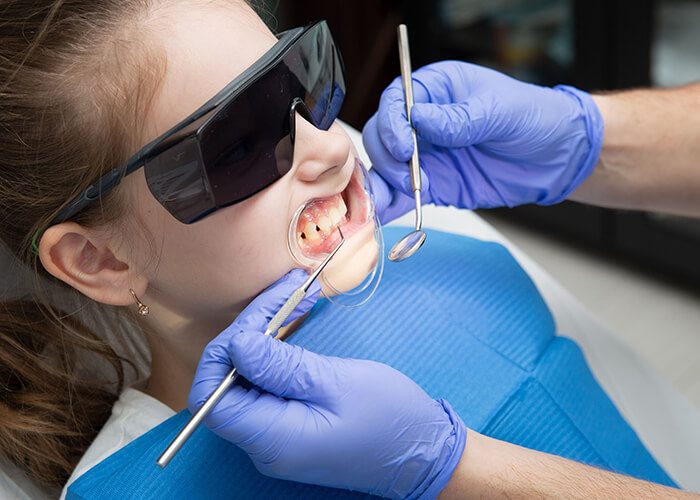
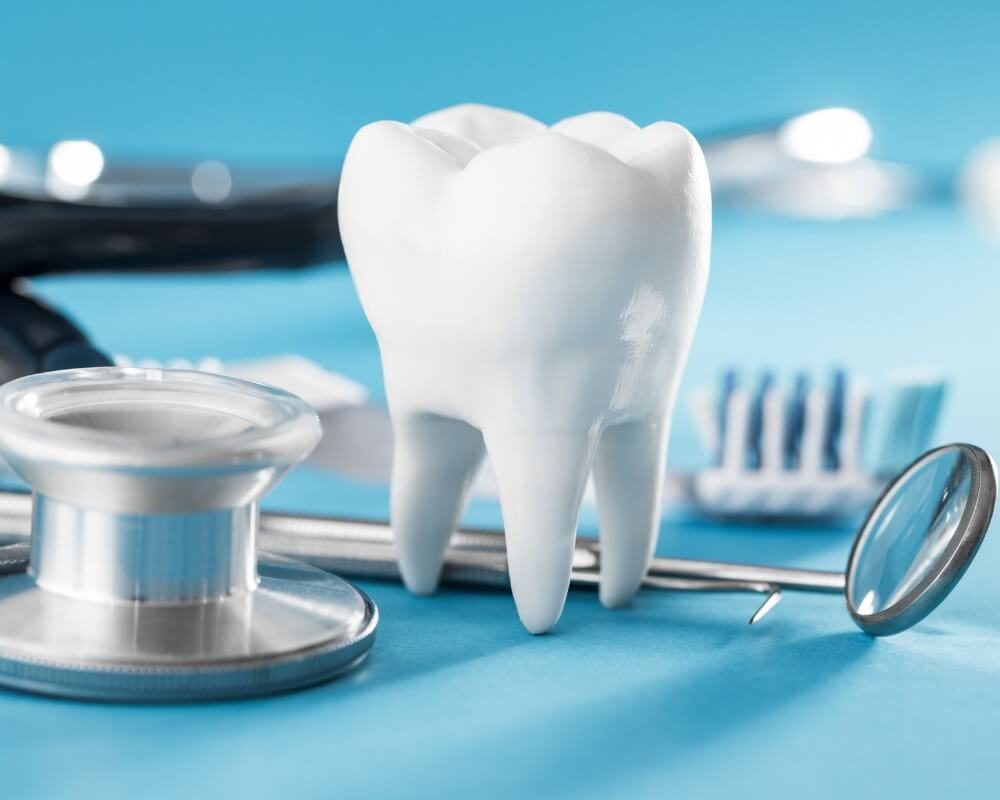
The biting surfaces of molars and premolars are not flat. They have natural pits and narrow grooves, called fissures, which can be finer than a single toothbrush bristle. Food and bacteria settle in them easily, which is why so much decay in children begins on these surfaces.
A fissure sealant is a thin resin coating that flows into those grooves and sets hard, leaving a smoother surface that is easier to keep clean. Your dentist may suggest sealants where there is:
Sealants are designed to protect, not repair. They work on healthy tooth surfaces before decay has started, which is why the timing matters.
They do not replace brushing, cleaning between teeth, fluoride and a sensible diet. Think of them as an extra layer of protection on the teeth that are most prone to cavities, alongside the rest of your preventive care.
Placing a sealant is a simple process that most children manage easily. The main task is keeping the tooth dry for a few minutes.
Sealants are often placed around a child's regular check-up, so the visit stays short and familiar. More on children's dentistry.
Your dentist confirms the surface is free of decay and suitable for sealing.
The tooth is cleaned and kept dry, because saliva and food stop the sealant from bonding.
A mild gel is applied briefly, then rinsed away, so the sealant can grip the enamel.
A bonding layer may go on first, then the liquid sealant is painted into the grooves.
Depending on the material, a curing light may be used to harden it.
We check how the teeth meet and polish away any excess.
Brush twice a day with fluoride toothpaste and clean between teeth. Sealants only cover the chewing surfaces.
Keep sweet foods and drinks to mealtimes, and avoid crunching ice or hard lollies, which can chip a sealant.
Sealants can wear or come loose over time, so we look at them at each examination.
Dental examinations: Regular check-upsGeneral information about fissure sealants. Your dentist will advise which teeth, if any, would benefit.
Mostly the adult molars, which usually erupt at about age 6 and again at about age 12. Premolars and some baby molars with deep grooves may also be sealed. Your dentist will recommend which teeth would benefit.
The sealant fills the deep grooves on the chewing surface and sets into a smooth, hard layer. This helps stop food and bacteria lodging in the grooves and makes the surface easier to clean.
An injection or drilling is not usually needed, and most children find the process easy. Some notice the taste of the conditioning gel, which is rinsed away quickly.
Many last for several years, but chewing can wear them down or chip them. Their condition is reviewed at your regular examinations, and a worn or missing sealant can usually be topped up or replaced.
Sometimes. If an adult's back teeth have deep, decay-free grooves and their risk of cavities is higher, a sealant may be worth considering. Your dentist will advise after an examination.
Fissure sealants are one of the services covered for eligible children under the Child Dental Benefits Schedule, so they can be bulk billed. Many extras policies also include cover, and your fund can confirm the details.
Book a check-up for your child and we will look at whether sealants could help, and explain everything before we start.
Sayers Dental Aesthetics & Implants
1/483 Sayers Road, Hoppers Crossing VIC 3029
(03) 9749 1178 · admin@sayersdental.com.au
Request a call back
Complete the form and our reception team will be in touch during business hours.
Your information is kept private and used only to respond to your enquiry. See our privacy policy. For urgent dental pain, please call us.