
01.Tooth-supported
Conventional bridge
The teeth on each side of the gap are shaped and crowned, and the replacement tooth is attached between them.
Custom crowns to protect damaged teeth and bridges to replace missing ones, shaded to suit your smile at our Sayers Road practice.
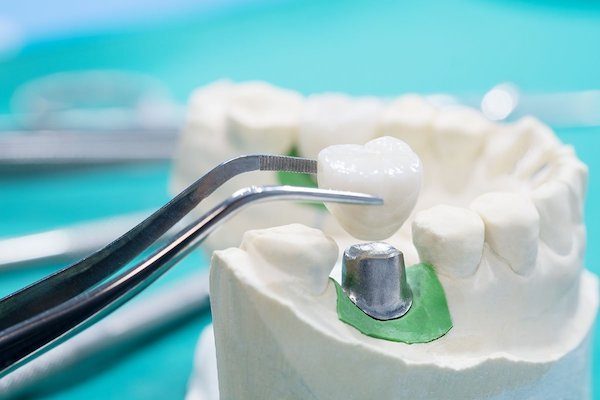
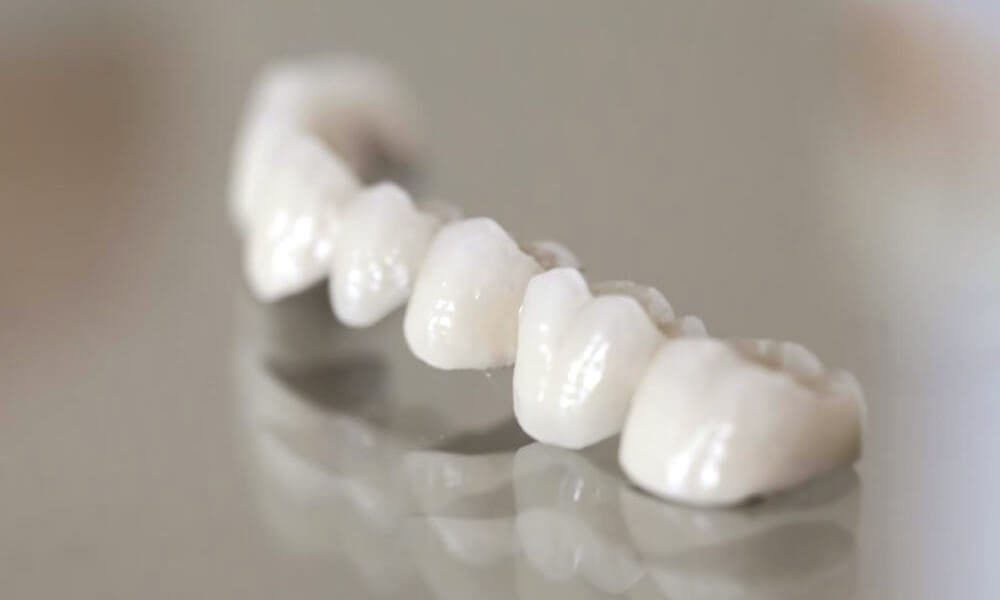
A crown is a custom-made cap that covers the whole visible part of a tooth. It helps hold a weakened tooth together, restores its shape and can improve how it looks. Crowns are also the visible tooth placed on top of a dental implant.
A bridge fills the space left by one or more missing teeth. The replacement tooth is joined to crowns on the teeth beside the gap, or held by implants, and the whole bridge is fixed in place, so it is not taken out for cleaning.
Both are planned at our Hoppers Crossing practice after an examination and X-rays, so the recommendation is based on the tooth in front of us rather than a standard package.
A crown is generally considered when a filling on its own would not be strong enough to support the tooth. Your dentist will explain whether a crown is likely to help, and what the alternatives are.
Many crowns are made in a dental laboratory over two visits. If the tooth is suitable, a ceramic crown can also be designed and milled in the practice and fitted the same day. About same-day CEREC crowns.
A bridge is one of several ways to replace a missing tooth. The type that may suit you depends on the teeth beside the gap and the bone underneath it.
The teeth on each side of the gap are shaped and crowned, and the replacement tooth is attached between them.
Implants carry the bridge in place of natural teeth, so the neighbouring teeth do not need to be reshaped.
About implants: Implant bridgeA removable option that may suit people with several gaps, or who would rather not have teeth prepared.
About dentures: Partial dentureA conventional bridge involves reshaping the teeth either side of the gap. Your dentist will weigh this up with you against the other options.
Most laboratory-made crowns and bridges need two appointments, usually about a week apart. Your dentist will confirm the timing for your treatment.
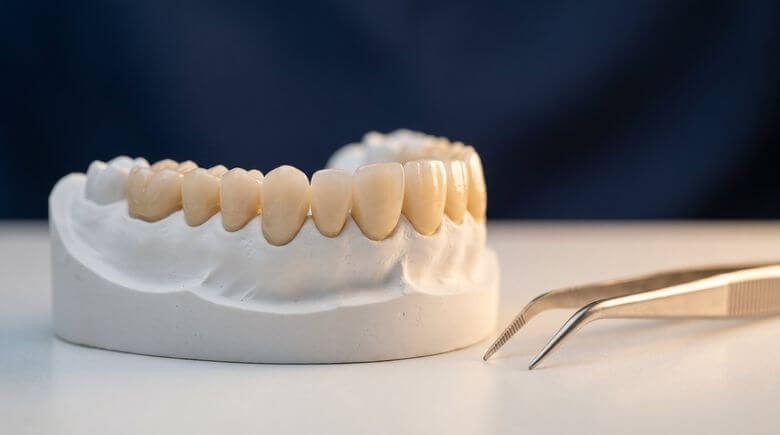
We check the tooth, its root and the bone around it, then talk through your options and the estimated cost.
Once the area is numb, the tooth is reshaped to make room for the crown. For a bridge, the teeth on both sides of the gap are prepared.
A digital scan or impression captures your teeth, and together we choose the shade, shape and size.
A temporary crown or bridge protects the prepared teeth and holds the space while the final one is made.
At the second visit the temporary comes off, and the new crown or bridge is checked for fit, bite and appearance before it is bonded in place.
Crowns and bridges cannot decay, but the tooth underneath and the gum around them can. Problems at the edges are a common reason a restoration needs replacing, so careful cleaning matters.
With good care and regular reviews, many crowns and bridges serve well for years, although no lifespan can be promised.
General information only. Your dentist will advise what suits you after an examination.
It varies, and a lifespan cannot be promised. The material, your bite, any grinding, how well you clean and how often you have check-ups all play a part. Many last for years with good care, and your dentist will tell you what to expect for your situation.
Not usually. Most crowns are placed on teeth with a healthy nerve. However, a back tooth that has had root canal therapy is often crowned afterwards to help protect it from cracking.
Ceramic and porcelain crowns and bridges are shaped and shaded to blend with the teeth beside them, so in most cases they are not obvious in conversation. We agree on the shade with you before the final restoration is made.
The tooth is numbed with local anaesthetic before it is prepared, so most people feel pressure rather than pain. Some sensitivity for a few days afterwards is common. If you feel anxious, sedation options are available for suitable patients.
Neither suits everyone. A conventional bridge relies on the teeth either side of the gap, which need to be reshaped, while an implant replaces the root of the missing tooth and stands on its own. Each has different benefits, risks and costs, which your dentist can compare for you.
Sometimes. If the tooth is suitable, a CEREC ceramic crown can be designed, milled and fitted in a single appointment at our practice. Other teeth are better suited to a laboratory-made crown over two visits.
Many extras policies cover part of the cost, but rebates depend on your fund and level of cover. You will receive an estimate first, and eligible items can be claimed on the spot with HICAPS. See payment options.
We'll examine the tooth or gap, explain whether a crown, a bridge or another option may suit you, and give you a written estimate.
Sayers Dental Aesthetics & Implants
1/483 Sayers Road, Hoppers Crossing VIC 3029
(03) 9749 1178 · admin@sayersdental.com.au
Request a call back
Complete the form and our reception team will be in touch during business hours.
Your information is kept private and used only to respond to your enquiry. See our privacy policy. For urgent dental pain, please call us.