If your dentist finds a cavity, the next question is usually how to repair it. A filling involves removing the decayed or damaged part of the tooth and rebuilding it with a durable material, which helps stop the decay from spreading and restores the tooth's shape so you can bite and chew comfortably.
Not every early cavity needs a filling straight away. Very early decay that has not broken through the enamel can sometimes be managed with fluoride, better cleaning and monitoring. Once a cavity has formed, though, it will not heal on its own.
What affects the choice of material?
Several factors guide which filling material your dentist recommends:
- the location of the cavity, and whether it shows when you smile
- how large and deep the cavity is
- how much biting force the tooth takes, and whether you grind or clench
- how the material looks next to your natural teeth
- cost, and what your health fund may contribute
- how many appointments the repair will need
The main filling materials
Composite resin
Composite is a tooth-coloured material that is bonded to the tooth and shaded to blend in. Because it bonds to the tooth, less healthy tooth structure usually needs to be removed. It suits most small to medium cavities, including in back teeth. Composite can stain or wear over time, and large composite fillings in heavily loaded teeth may not last as long as some alternatives.
Ceramic (porcelain)
Ceramic restorations, such as porcelain inlays and onlays, are made outside the mouth to fit the prepared tooth closely. They resist staining and closely match the look of natural teeth, which makes them an option for larger repairs where a crown is not needed. With CEREC, a ceramic restoration can sometimes be designed and milled at the practice in a single visit. Ceramic can chip or fracture, usually costs more than a direct filling, and may need more of the tooth to be shaped.
Glass ionomer
Glass ionomer is a tooth-coloured material that releases small amounts of fluoride, which may help protect the surrounding tooth. It is often used for baby teeth, for cavities near the gum line or on root surfaces, and as a temporary or interim filling. It is less wear-resistant than composite, so it is not usually the first choice for the biting surfaces of adult back teeth.
Amalgam
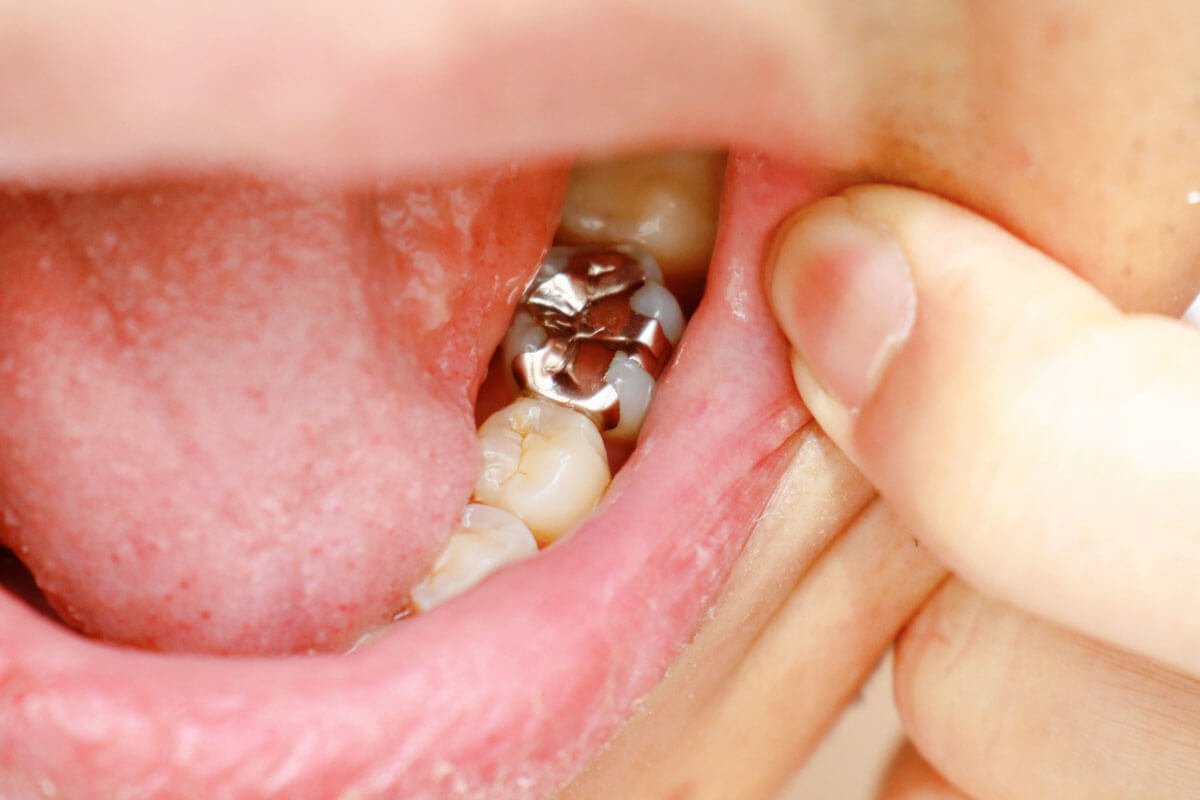
Amalgam, the silver-coloured filling many people have from years gone by, is hard-wearing and has a long track record. It is now placed much less often in Australia, largely because it does not match the colour of teeth and needs more tooth removed to hold it in place. If you have older amalgam fillings in good condition, they generally do not need to be replaced. We check their condition at your examination and suggest replacement only if there is a clinical reason.
Comparing the options
| Material | Appearance | Often used for | Things to consider |
|---|---|---|---|
| Composite resin | Tooth-coloured | Small to medium cavities, front and back teeth | Can stain or wear over time |
| Ceramic inlay or onlay | Tooth-coloured, stain-resistant | Larger repairs where a crown is not needed | Higher cost; can chip |
| Glass ionomer | Tooth-coloured | Baby teeth, gum-line and root-surface cavities, temporary fillings | Less wear-resistant |
| Amalgam | Silver-coloured | Now placed much less often | Does not match tooth colour |
Which filling material is right for you?
There is no single material that suits every tooth. The right choice is the one that fits the size and position of the cavity, your bite and your priorities. Your dentist will examine the tooth, take an X-ray if needed, and explain the options, their likely costs and their pros and cons, so you can decide together.
Health funds with extras cover often pay a benefit towards fillings, depending on your policy and limits, and payment plans are available for larger treatment if you would like to spread the cost.
What to expect when you have a filling
Most fillings are completed in a single appointment under local anaesthetic. You may feel pressure and vibration, but the area should be numb. Your dentist removes the decay, shapes the tooth, places the filling and checks your bite. The tooth may feel a little sensitive for a few days afterwards. Larger ceramic restorations may need a longer visit, or a second appointment if made by a laboratory.
If you have a cavity or a filling that needs attention, call our Hoppers Crossing team on (03) 9749 1178 or request an appointment online. You can read more about tooth fillings at Sayers Dental.
This article is general information only and is not a substitute for advice from a registered health practitioner. Suitability, risks, benefits and costs depend on your individual situation and are confirmed after a clinical assessment. All dental treatment carries risks, and outcomes vary between patients.