Dental implants are designed to be strong and to withstand normal chewing forces, and with good care they can last many years. They are made to look and work much like natural teeth. Like natural teeth, though, they are not unbreakable. An implant crown can chip or crack if you bite on something very hard, grind or clench your teeth, or take a knock to the face, and problems with the gum and bone around an implant can loosen it over time.
If something happens to your implant, it helps to know how serious it is likely to be and what to do next.
How long should a dental implant last?
There is no fixed lifespan for a dental implant, and none can be promised. Studies report that most implants are still in place and working many years after treatment, but implants can and do fail. How long an implant lasts depends on factors such as:
- how well you clean around it each day
- the health of your gums and the bone around the implant
- smoking, and general health conditions such as diabetes
- grinding, clenching and how your teeth meet
- regular check-ups, so small problems are found early
The crown on top of an implant is a little different. Like a crown on a natural tooth, it wears with use and may need repairing or replacing at some point, even when the implant underneath is healthy.
The parts of an implant
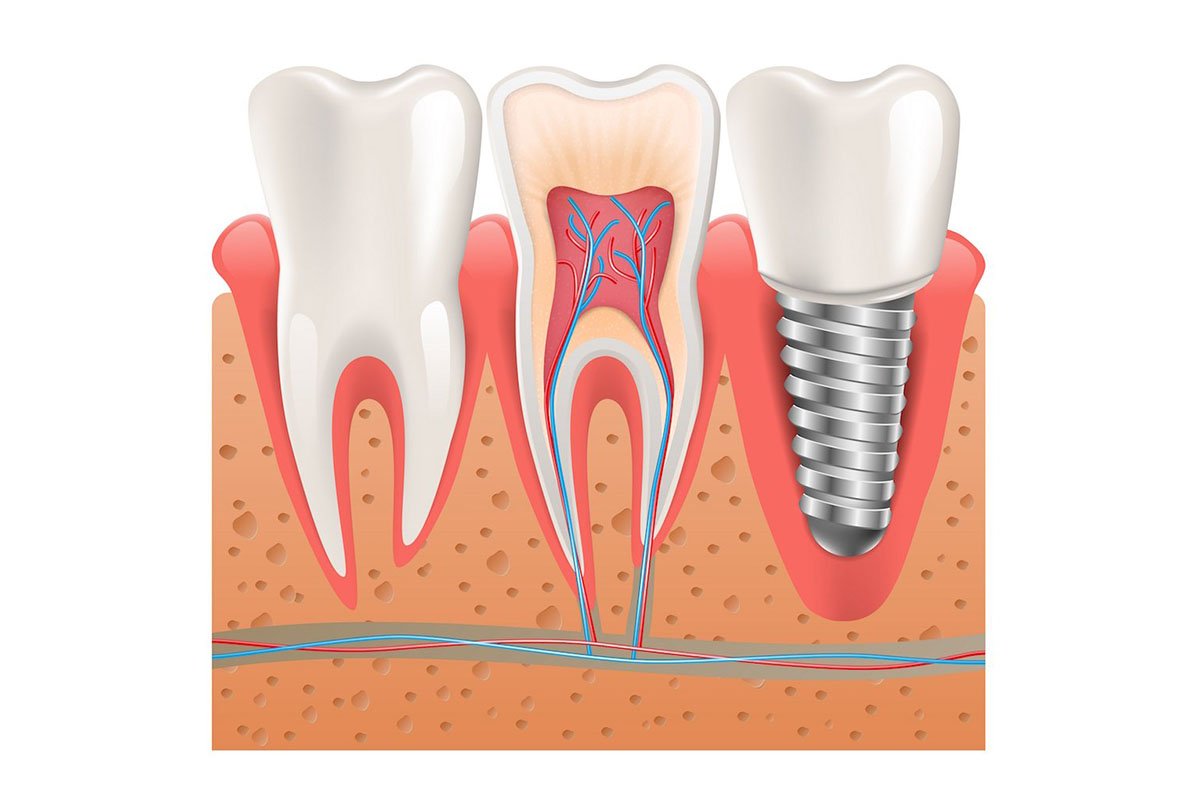
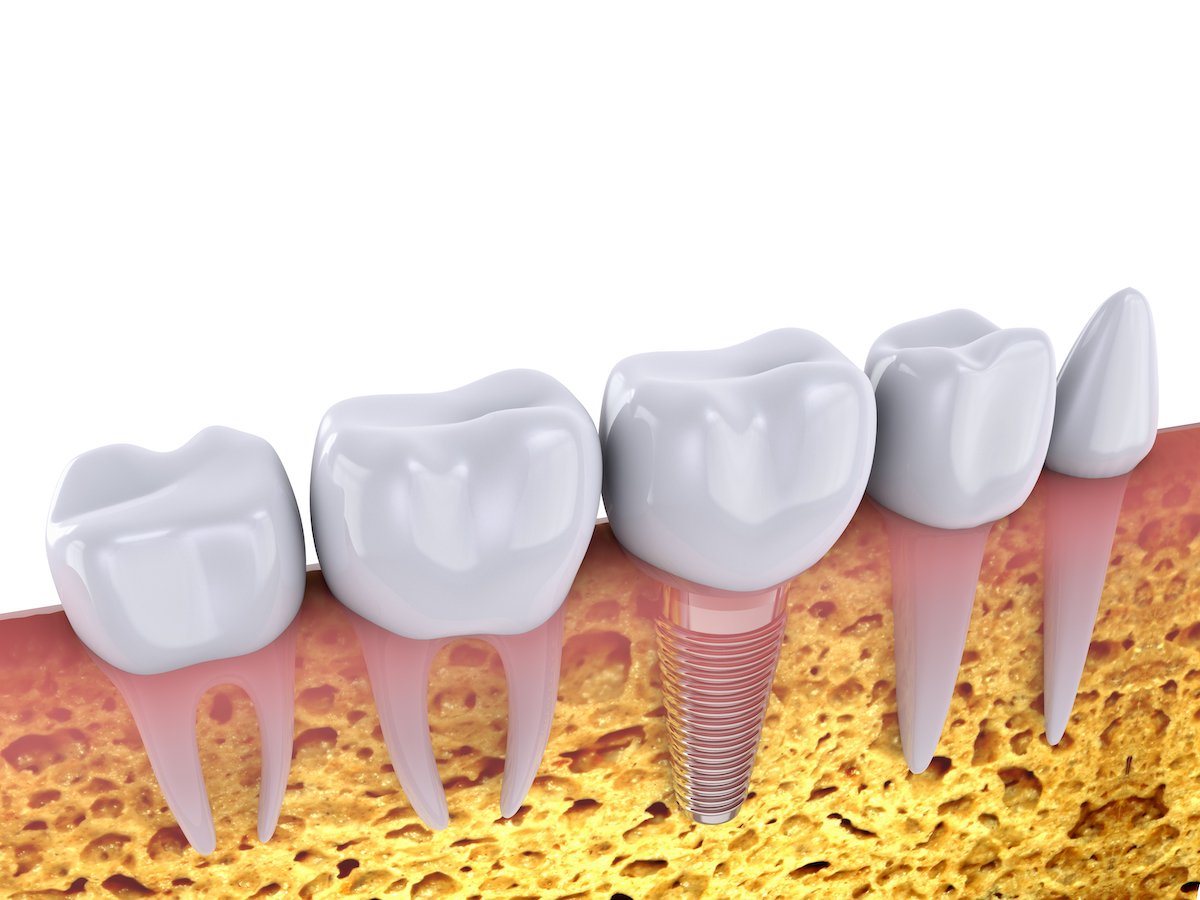
When people say "implant", they usually mean the whole replacement tooth. It is actually made up of three parts:
- The implant (fixture). A small titanium post placed in the jawbone that acts like a tooth root. During healing, bone grows tightly against its surface, a process called osseointegration.
- The abutment. A connector that joins the implant to the crown, usually held in place by a small screw.
- The crown. The visible tooth, made from ceramic or porcelain fused to metal. An implant can also support a bridge or a denture.
Which part has been damaged makes a big difference to how serious the problem is.
What can go wrong?
A chipped or cracked crown
This is the most common kind of damage. Ceramic can chip or crack, much like a natural tooth, particularly after biting on something hard or with heavy grinding. The implant underneath is usually unaffected.
A loose crown
If the tooth feels wobbly or clicks when you bite, the screw holding the crown or abutment may have loosened, or the cement holding the crown may have failed. This is often fixable without disturbing the implant itself.
A broken screw or abutment
Less commonly, the screw or abutment can bend or break, usually from repeated heavy forces such as grinding. These parts can generally be removed and replaced.
A loose implant
If the implant itself moves, rather than just the crown on top, it usually means the implant has lost its bond with the bone. This is more serious, and the implant generally needs to be removed. It is not always easy to tell at home whether the crown or the implant is loose, so an examination and X-ray are needed.
Gum and bone problems around the implant
Implants do not decay, but the gum and bone around them can become inflamed and infected, a condition called peri-implantitis. Signs include bleeding, swelling, tenderness, a bad taste or pus around the implant. If it is not treated, the bone supporting the implant can be lost and the implant can loosen.
A fractured implant
It is rare for the titanium implant itself to break, but it can happen, for example after significant bone loss or very heavy biting forces. A fractured implant needs to be removed.
What to do straight away
Try to stay calm. Most implant damage is not an emergency in the medical sense, but it does need prompt attention.
- Keep any pieces. If part of the crown, a screw or the whole crown has come off, put it in a clean, sealed container and bring it with you.
- Do not try to fix it yourself. Avoid gluing or pushing a crown back in place, as this can damage the parts or trap bacteria.
- Protect the area. Chew on the other side and avoid hard, sticky or very hot or cold foods until it has been checked.
- Keep it clean. Brush gently around the area, and rinse with warm salty water after meals.
- Manage discomfort. If you need pain relief, use an over-the-counter medicine as directed on the pack, and ask your pharmacist if you are unsure what is suitable for you.
- Call your dentist. Let us know what happened, and we will try to see you promptly.
If the damage happened during an accident or a blow to the face, or you have swelling that affects your breathing or swallowing, bleeding that will not stop or another serious injury, go to a hospital emergency department or call 000. Our dental emergencies page has more on what to do.
How implant damage is repaired
Treatment depends on what is damaged, so the first step is an examination and X-ray.
- Chipped crown. A small chip may simply be smoothed and polished. Larger damage usually means making a new crown. A digital scan or impression is taken and a new crown is made to fit, much like a crown on a natural tooth. The implant in the bone is not disturbed.
- Loose crown or screw. The screw can often be retightened or replaced, and a cemented crown can sometimes be re-cemented. If the crown is damaged, a new one may be made.
- Broken abutment. The abutment is replaced, usually without disturbing the implant.
- Peri-implantitis. Treatment may involve thorough cleaning around the implant, improved home care and closer reviews, and in some cases surgery. Results vary, and treating it early generally improves the chance of keeping the implant.
- Loose or fractured implant. The implant is removed and the area is cleaned. A bone graft may be needed, and the site usually heals for a few months before a new implant can be considered. Sometimes a new implant can be placed sooner, depending on the bone. Alternatives such as a bridge or a denture may also be discussed.
What does replacing an implant involve?
Removing and replacing an implant is a surgical procedure, usually done under local anaesthetic. The anaesthetic numbs the area, so you should not feel sharp pain, although you may feel pressure. Sedation options may be available for suitable patients who feel anxious. As with any surgery, there are risks, which your dentist will explain beforehand.
Recovery is usually similar to the original implant surgery. Some tenderness, swelling or bruising for a few days is common, and you will be given aftercare instructions to follow.
If one implant is damaged, are my other implants at risk?
Damage to one implant does not usually mean others are affected. However, the cause of the damage might. Grinding, a knock to the face or gum problems can affect other teeth and implants too, so your dentist will check all of them, not just the one that is causing trouble.
What if my implant was placed somewhere else?
An implant placed at another practice, including overseas, can usually still be assessed. Implant parts are specific to each manufacturer and system, so if you have any records of the implant brand or components used, please bring them to your appointment. They can make repairs simpler.
How to lower the risk of damage
- Clean around your implants every day with a toothbrush and interdental brushes or floss, as your dentist shows you.
- Keep up regular check-ups and professional cleans so problems are found early.
- If you grind or clench, ask about a custom night splint, and wear a mouthguard for contact sport.
- Avoid chewing ice or hard lollies, and do not use your teeth to open packets or bottles.
- If you smoke, quitting supports the health of the gum and bone around your implants.
If you have damaged a dental implant, call our Hoppers Crossing team on (03) 9749 1178 or request an appointment online, and we will try to see you promptly. You can read more about dental implants at Sayers Dental.
This article is general information only and is not a substitute for advice from a registered health practitioner. Suitability, risks, benefits and costs depend on your individual situation and are confirmed after a clinical assessment. All dental treatment carries risks, and outcomes vary between patients.